

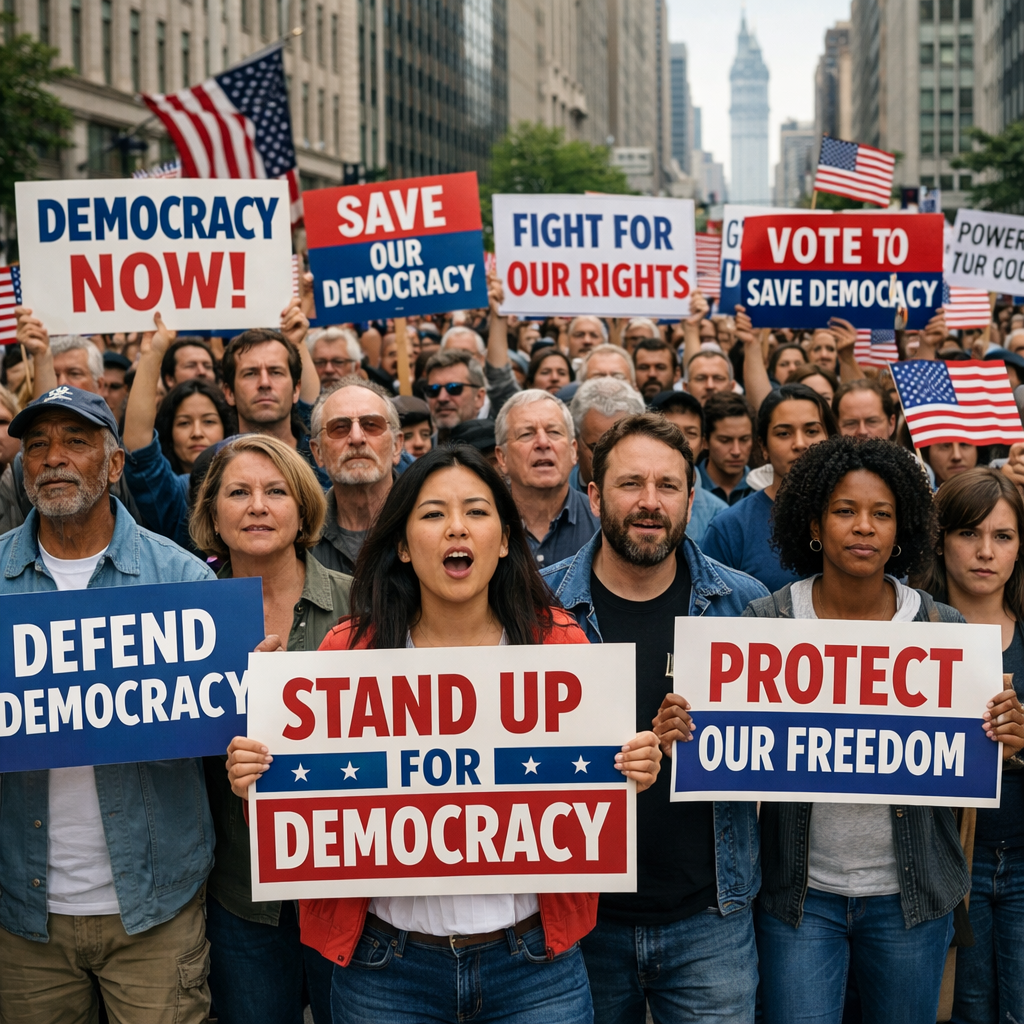
In recent times, the United States has witnessed the rise of the ‘No Kings’ movement, a series of nationwide rallies advocating for the preservation of democratic values and governmental accountability. These demonstrations have drawn participants from diverse backgrounds, all united by a common concern over the direction of national policies and leadership.
Origins and Objectives
The ‘No Kings’ movement began as a grassroots response to perceived overreach by federal authorities and policies that some citizens view as undermining democratic institutions. The name ‘No Kings’ symbolizes a rejection of authoritarian tendencies and a reaffirmation of the nation’s foundational commitment to democracy.
Nationwide Participation
From major metropolitan areas to smaller communities, the movement has gained traction. For instance, in St. Paul, Minnesota, thousands gathered on the Capitol lawn to express their concerns. The event featured notable figures who praised the state’s residents for their active civic engagement.
Key Issues Highlighted
Participants in the ‘No Kings’ rallies have voiced apprehensions over various issues, including immigration enforcement practices, foreign policy decisions, and the protection of civil liberties. The movement underscores a collective desire for policies that reflect the will and rights of the populace.
Implications for Local Communities
While the ‘No Kings’ movement is national in scope, its impact resonates at the local level. Communities like Pagosa Springs are reminded of the importance of civic participation and staying informed about national developments that can influence local governance and daily life.
Looking Ahead
As the ‘No Kings’ movement continues to evolve, it serves as a testament to the enduring spirit of democracy in the United States. It highlights the power of collective action and the ongoing dialogue between citizens and their government.