

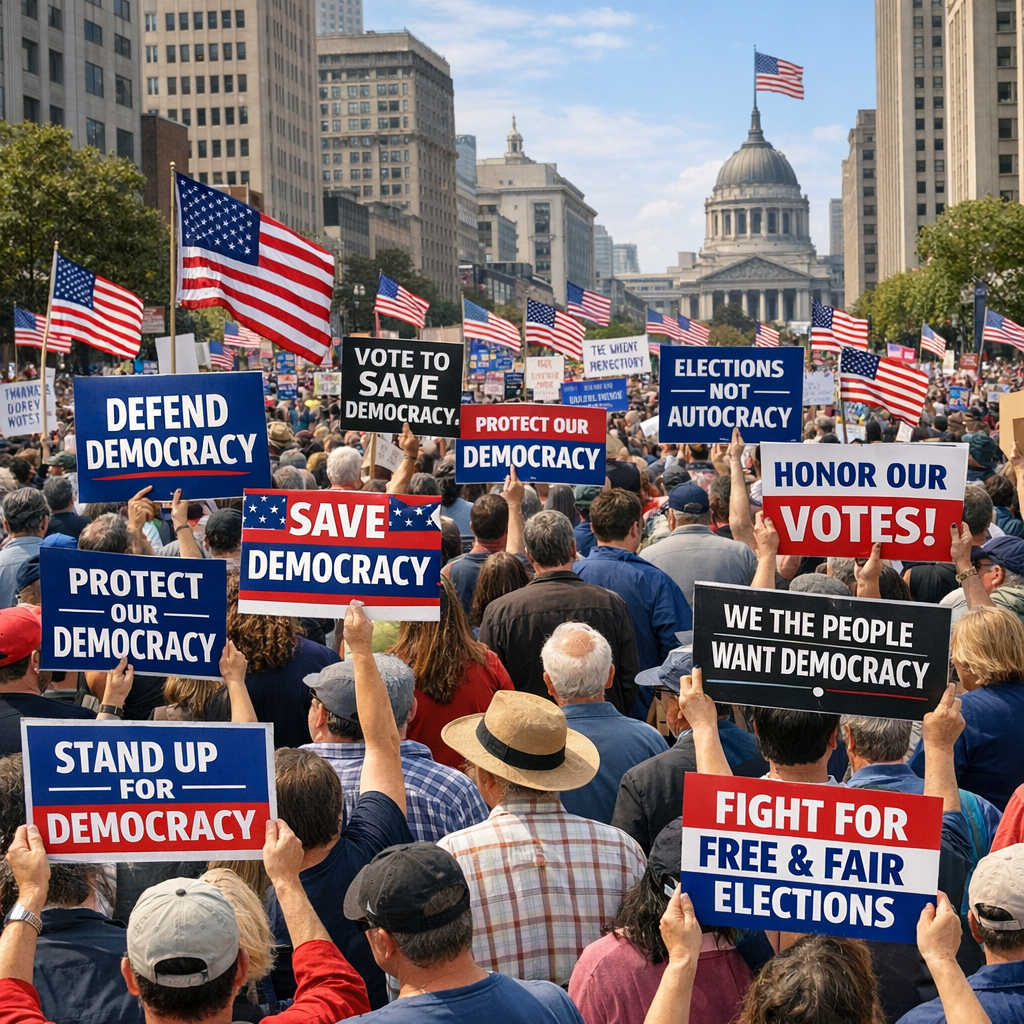
In recent months, the ‘No Kings’ movement has gained significant traction across the United States, with rallies drawing large crowds advocating for the preservation of democratic principles and expressing concerns over perceived authoritarian tendencies in government.
Origins and Objectives
The ‘No Kings’ movement emerged as a grassroots response to policies and actions that participants view as undermining democratic institutions. The name symbolizes a rejection of autocratic leadership and a reaffirmation of the nation’s foundational commitment to democracy.
Nationwide Demonstrations
On March 28, 2026, thousands gathered in St. Paul, Minnesota, for a flagship event featuring performances and speeches emphasizing resistance to aggressive immigration enforcement and other policies deemed authoritarian. Similar rallies occurred in cities like New York, Washington D.C., and San Diego, reflecting widespread concern over issues such as the war in Iran and the rollback of transgender rights.
Political Reactions
Responses to the movement have been polarized. White House spokesperson Abigail Jackson dismissed the rallies as products of “leftist funding networks” with limited public support. Conversely, organizers and participants argue that the movement represents a broad, grassroots demand for the protection of democratic values.
Implications for Democracy
The ‘No Kings’ movement underscores a growing public engagement in political discourse and a collective call for accountability and adherence to democratic principles. As the movement continues to evolve, it highlights the dynamic nature of civic participation in shaping the nation’s political landscape.