

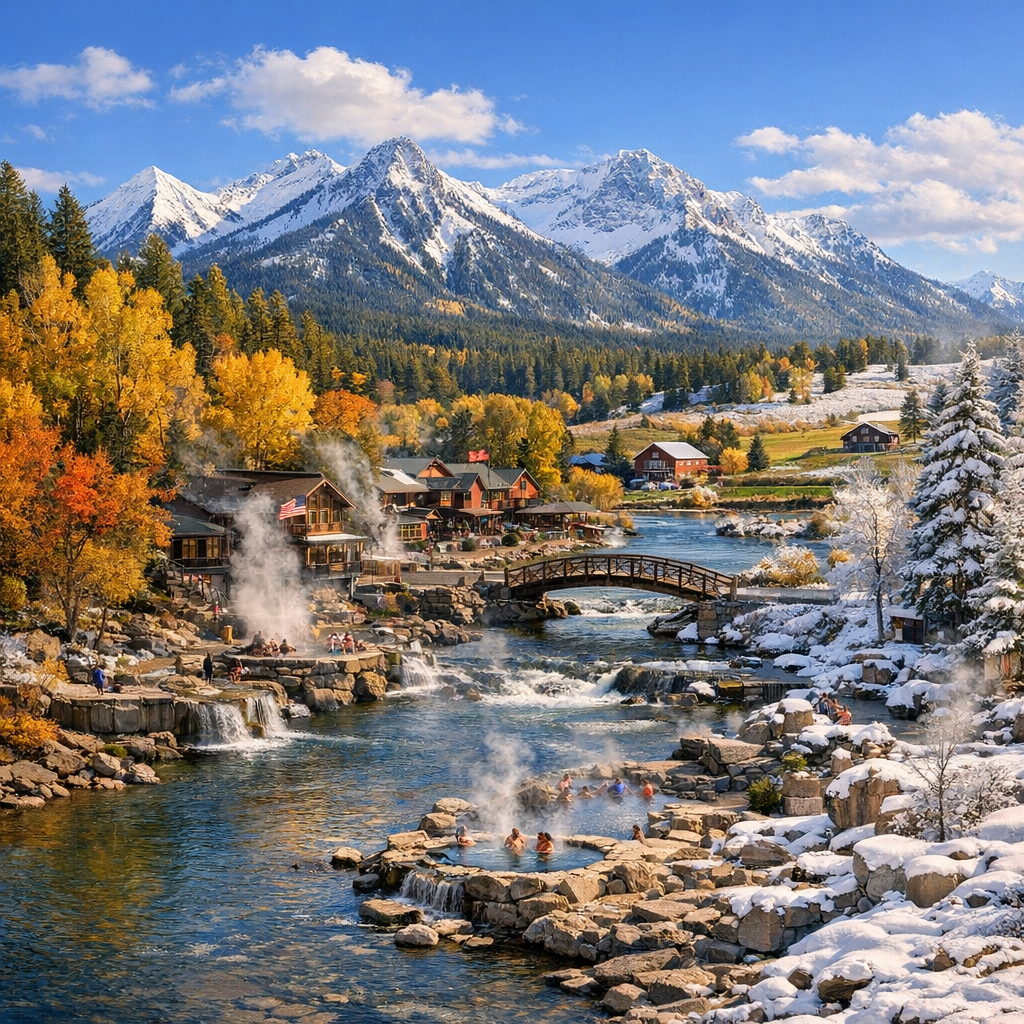
Pagosa Springs, nestled at approximately 7,000 feet on the western slope of the Continental Divide, offers a unique blend of mountain and high-desert climates. This geographical positioning results in an unusually mild climate compared to much of the surrounding Southwest, characterized by abundant sunshine and four distinct seasons.
Winter
Winters in Pagosa Springs are marked by clear, sunny days and crisp, cold nights. While the nearby Wolf Creek Ski Area often receives over 450 inches of natural snowfall annually, downtown Pagosa Springs averages about 62 inches. Daytime temperatures typically remain in the high 40s, with nighttime temperatures rarely dropping below the 20s. This combination provides excellent conditions for winter sports enthusiasts and those who appreciate a snowy landscape without extreme cold. Source
Spring
As winter recedes, spring brings a resurgence of life to the area. The San Juan River swells with meltwater, delighting rafters and kayakers. Days are warm and clear, while nights remain cool. The mountains retain their snow cover into April, offering opportunities for late-season skiing. This season is ideal for outdoor activities as the landscape transitions from snow-covered to lush greenery. Source
Summer
Summers are characterized by warm, sunny days and pleasantly cool evenings. Afternoon thundershowers are common but usually brief, lasting less than half an hour. July temperatures typically range from highs in the low 80s to nighttime temperatures in the high 50s. The growing season, though short, lasts into the fall, with an average duration of 90-95 days. This season is perfect for hiking, camping, and enjoying the natural beauty of the area. Source
Fall
Fall in Pagosa Springs is marked by Indian summers, with summer-like daytime temperatures lasting well into October, accompanied by cool evenings. The mountains are adorned with vibrant yellows and oranges as aspen and birch trees change color. By November, the high mountains have often received enough snow for Wolf Creek Ski Area to open, signaling the transition back to winter. This season offers a picturesque setting for photography and enjoying the changing foliage. Source
Understanding these seasonal patterns can help residents and visitors alike make the most of what Pagosa Springs has to offer year-round.