

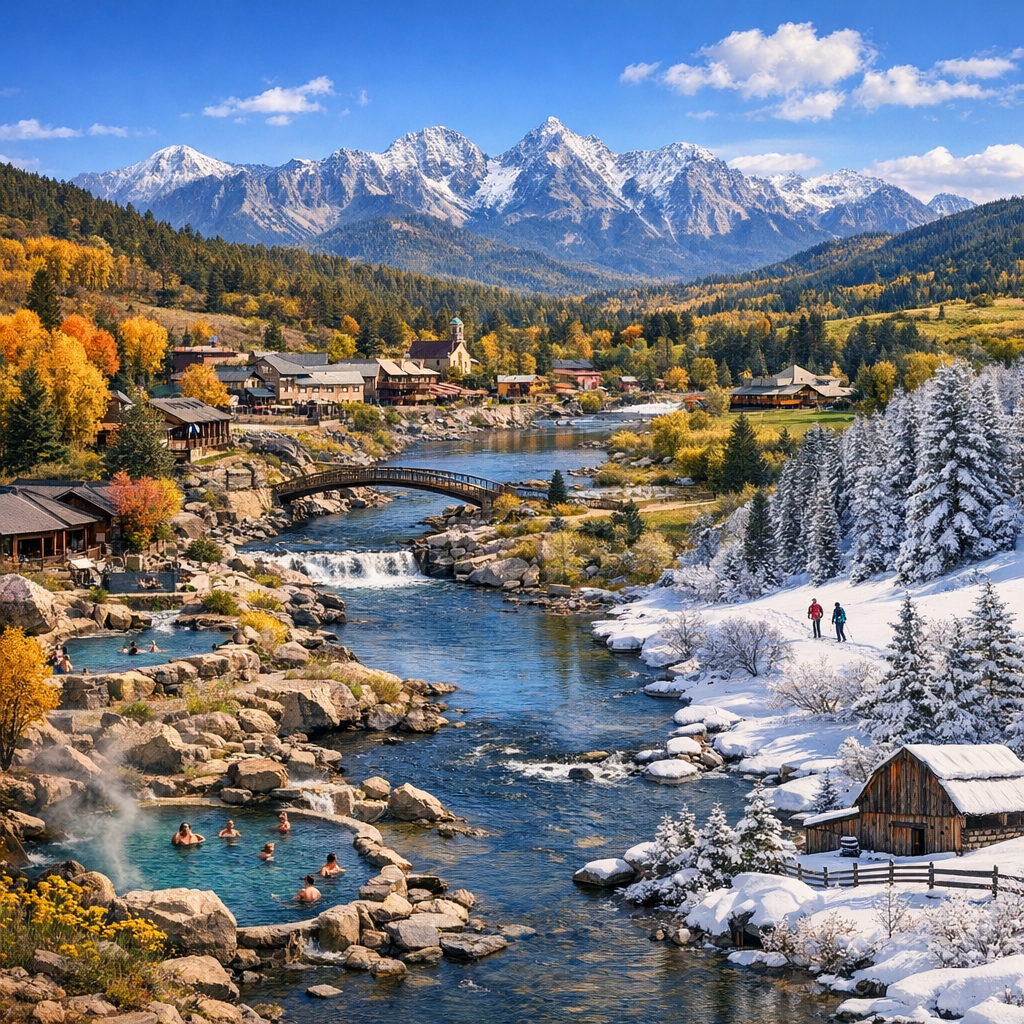
Pagosa Springs, nestled at approximately 7,126 feet above sea level on the western slope of the Continental Divide, offers a unique blend of mountain and high-desert climates. This geographical positioning results in an unusually mild climate compared to much of the surrounding Southwest, characterized by abundant sunshine and four distinct seasons.
Winter
Winters in Pagosa Springs are marked by powdery snow, clear sunny days, and crisp cold nights. The nearby Wolf Creek Ski Area, renowned for receiving over 450 inches of natural snowfall annually, provides ample opportunities for winter sports enthusiasts. In contrast, downtown Pagosa Springs averages about 62 inches of snowfall, with daytime temperatures often remaining in the high 40s, ensuring that streets are nearly always free of snow due to the warm daytime temperatures. Nighttime temperatures can drop dramatically, but rarely go below the 20s.
Spring
Spring brings a resurgence of life to the region. The hills come alive with the first growth of the season, and local rivers swell with snowmelt, delighting river rafters and kayakers. Days are warm and clear, while nights remain cool. The mountains retain their snow cover, often allowing for spring skiing until mid-April.
Summer
Summers are characterized by warm, sunny days and pleasantly cool evenings, making Pagosa Springs a real treat. Afternoon thundershowers are a regular feature during summer, usually lasting less than half an hour. Temperatures during July typically range from highs in the low 80s to nighttime temperatures in the high 50s. The growing season gets off to a late start in Pagosa but lasts into the Fall, with an average season of 90-95 days.
Fall
Indian summers are a normal event in Pagosa, with summer-like daytime temperatures lasting well into October, accompanied by cool evenings. In the mountains, the great groves of aspen and birch transform into their dramatic fall colors of vibrant yellows and oranges. By November, the high mountains have already received enough snow for Wolf Creek Ski Area to open.
Environmental Considerations
Pagosa Springs’ unique climate and seasonal changes have fostered a community deeply connected to its environment. Local organizations, such as the Pagosa Springs Friends of the Wild, are dedicated to protecting wildlife corridors, open spaces, and dark skies through community-led conservation efforts. Their mission envisions a thriving Pagosa where nature, people, and progress coexist in balance.
Understanding and appreciating the distinctive climate patterns and seasonal transitions of Pagosa Springs not only enriches the experience of living in or visiting the area but also underscores the importance of ongoing environmental stewardship to preserve this unique region for future generations.