

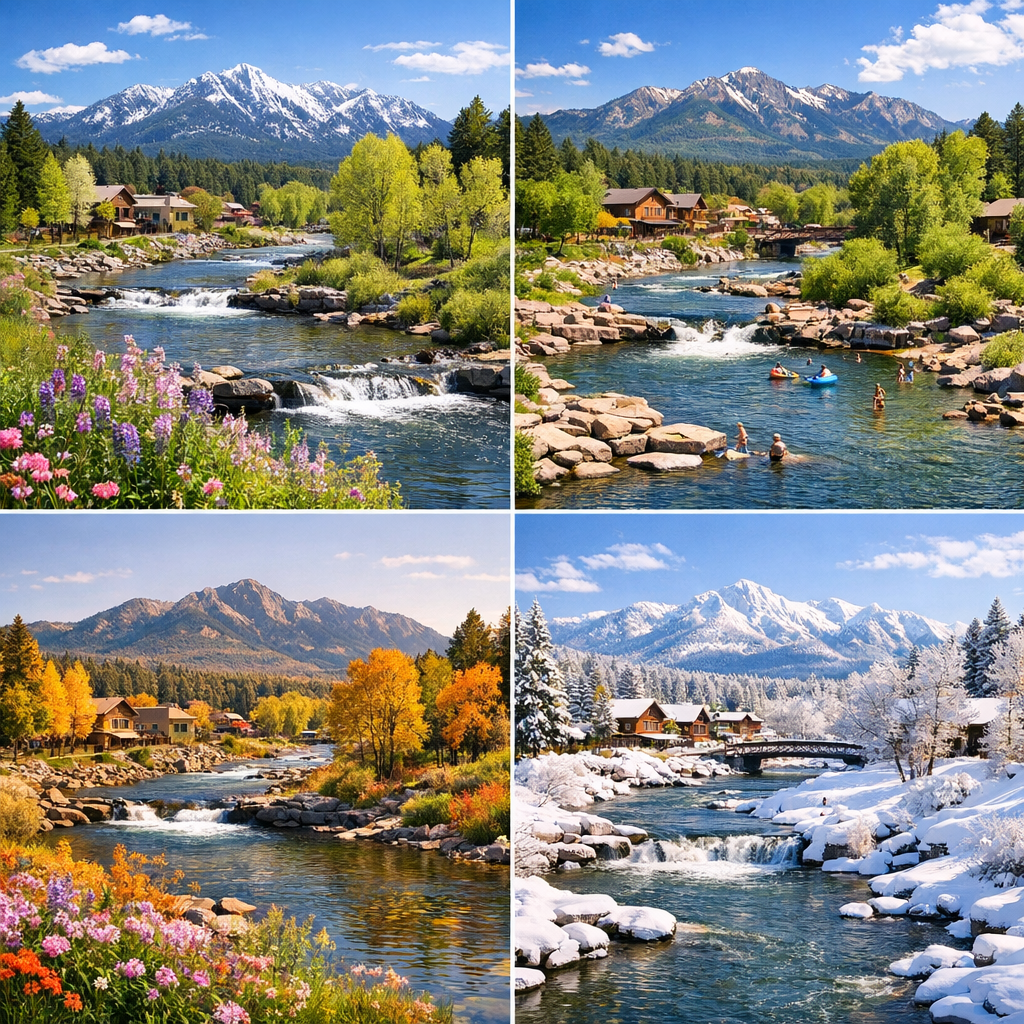
Pagosa Springs, nestled at approximately 7,126 feet above sea level on the western slope of the Continental Divide, offers residents and visitors a unique climate characterized by four distinct seasons and abundant sunshine. This combination of high desert plateau and the Rocky Mountains to the north and east creates an unusually mild climate, especially in the summer months. Pagosa sees around 300 days of sun each year, as well as four distinct seasons.
Winter
Winters in Pagosa Springs are marked by clear, sunny days and crisp, cold nights. While the nearby Wolf Creek Ski Area receives over 450 inches of natural snowfall annually, downtown Pagosa averages about 62 inches. Daytime temperatures often remain above freezing, with average highs in the high 40s, while nighttime temperatures can drop dramatically, but rarely go below the 20s.
Spring
As the snow recedes, the San Juan River surges with meltwater, and meadows burst back to life. Spring days are warm and luminous, perfect for early hiking or paddling, while the nights remain brisk. The higher slopes keep their snowpack into April, offering excellent late-season skiing before wildflowers begin to color the valleys.
Summer
Summers are warm and dry, with average high temperatures in July reaching 81°F (27°C). The warm season lasts for 3.5 months, from June 1 to September 16, with an average daily high temperature above 73°F.
Autumn
Fall arrives with luminous blue skies and a lingering warmth that often lasts through October. Indian summers are a normal event in Pagosa, with summer-like daytime temperatures lasting well into October, accompanied by cool evenings. Aspen and cottonwood groves in the mountains turn dazzling shades of gold and orange, framing clear rivers and mountain ridges. By November, the higher elevations begin collecting the early snow that signals another winter on the way, while Pagosa’s lower valley enjoys a few more weeks of mild weather.
Understanding these seasonal patterns can help residents and visitors make the most of Pagosa Springs’ diverse climate, whether it’s planning outdoor activities or preparing for the changing weather conditions throughout the year.