

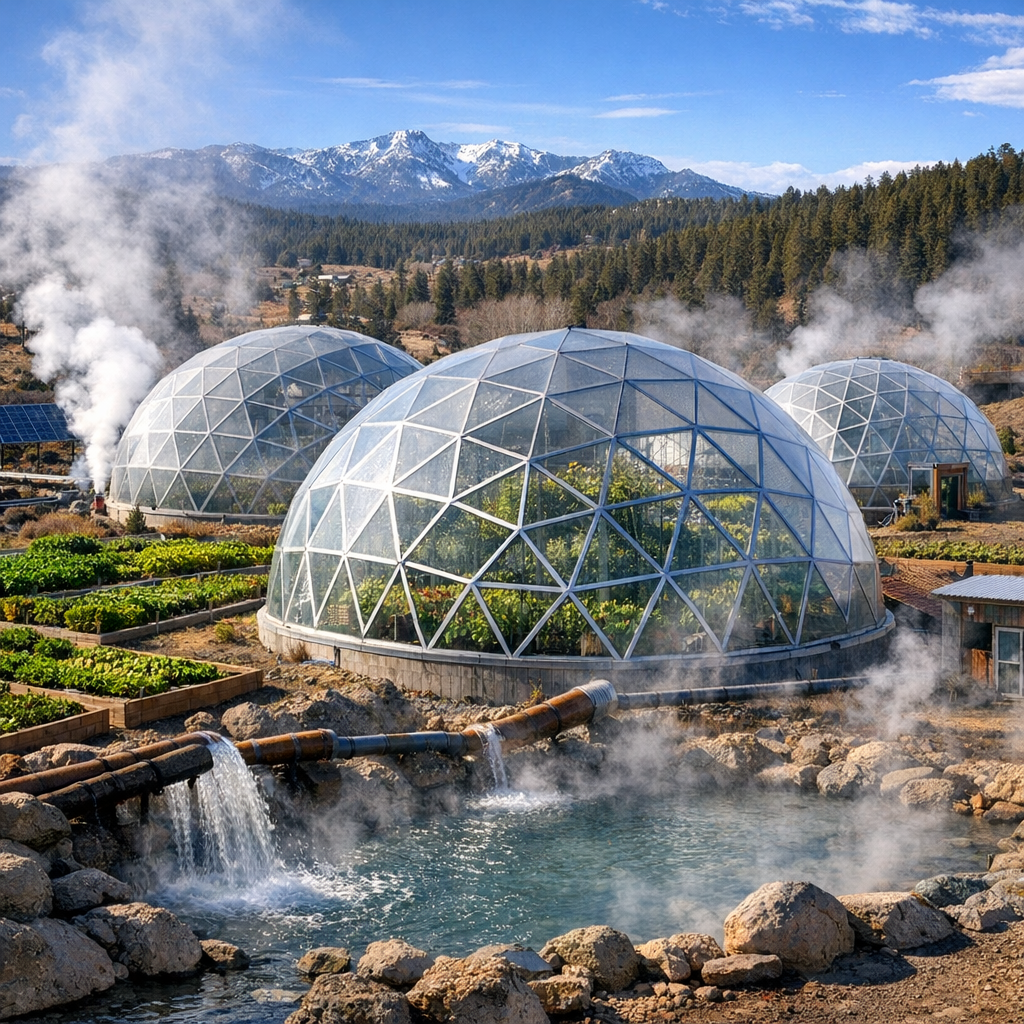
In the heart of Pagosa Springs, three geodesic grow domes stand as a testament to the town’s innovative use of its natural geothermal resources. These structures, operated by the Geothermal Greenhouse Partnership (GGP), harness the Earth’s heat to cultivate fresh produce throughout the year, even amidst the challenges of a high-altitude climate.
Established in 2016, the GGP’s mission is to educate the community about sustainable agriculture by utilizing local renewable energy sources. The domes serve multiple purposes: one functions as an educational space, another as a community garden, and the third as an innovation hub. Inside these climate-controlled environments, volunteers and students grow a variety of crops, including carrots, tomatoes, and flowers. A koi pond within the community garden dome aids in temperature regulation, ensuring optimal growing conditions regardless of external weather.
Pagosa Springs’ unique geothermal activity provides a consistent and renewable heat source. The town’s geothermal utility channels this energy to various parts of the community, including the grow domes and local resorts. This sustainable approach not only reduces reliance on traditional energy sources but also fosters a sense of community involvement and education.
Beyond agriculture, the town’s geothermal resources have been instrumental in other community projects. For instance, the Pagosa Springs Wetland leverages geothermal heat to maintain a habitat for diverse bird species year-round, enhancing local biodiversity and offering residents and visitors a unique natural attraction.
The success of these initiatives underscores Pagosa Springs’ commitment to sustainability and community engagement. By creatively utilizing its geothermal assets, the town sets a compelling example for other communities seeking to integrate renewable energy into their local projects.