

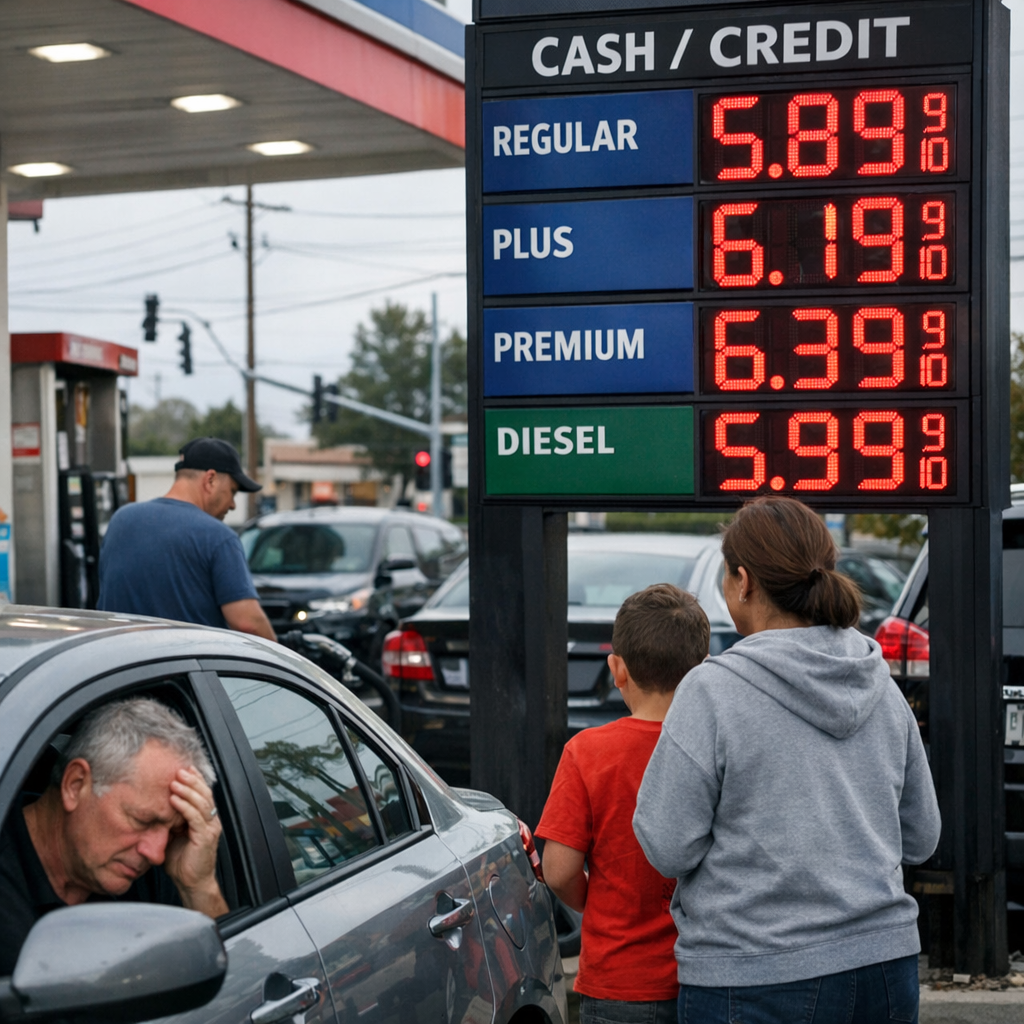
As the nation grapples with economic challenges, many Americans are feeling the pinch of rising inflation and escalating energy costs. Recent data indicates a surge in consumer prices, with inflation reaching 3.8% in April, the highest in three years. This uptick is largely attributed to increased energy expenses following geopolitical tensions in the Middle East.
The closure of the Strait of Hormuz has significantly impacted global oil supply chains, leading to a spike in gasoline prices. Nationally, the average price for regular gasoline has surpassed $4.50 per gallon, with some states experiencing prices above $5. This surge places additional strain on household budgets, particularly for those in rural areas where transportation is essential.
Consumer sentiment has also taken a hit. A recent poll revealed that 70% of Americans are either “angry” or “frustrated” with the current economic situation. Many express concerns about their financial stability and the ability to keep pace with rising costs.
In response, the administration has proposed measures such as a gas tax holiday to alleviate some of the financial burdens on consumers. However, these proposals face challenges in Congress, with debates over their potential impact on federal funding and long-term economic health.
For residents of Pagosa Springs and similar communities, these national economic trends have tangible local effects. Increased transportation costs can influence the prices of goods and services, while economic uncertainty may affect local businesses and employment opportunities.
As the situation evolves, staying informed and proactive in financial planning becomes crucial. Engaging with community resources, supporting local businesses, and participating in dialogues about economic policies can empower individuals to navigate these uncertain times more effectively.