

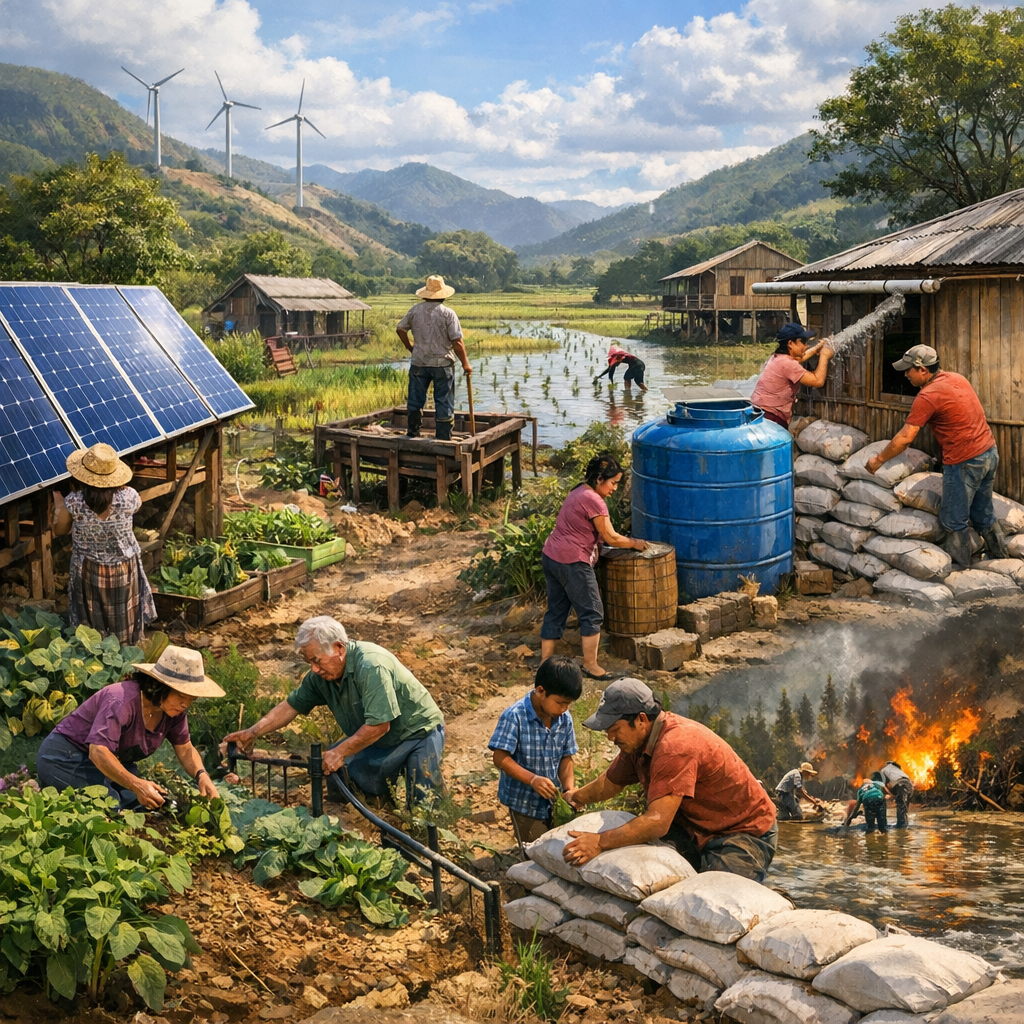
In our interconnected world, events unfolding thousands of miles away can have profound effects on rural communities like Pagosa Springs. Understanding these global influences is crucial for building resilience and ensuring sustainable development.
Climate Change and Environmental Challenges
Climate change is a pressing global issue with direct repercussions for rural areas. Increased frequency of extreme weather events, such as droughts and floods, disrupt agricultural productivity and threaten food security. For instance, in Latin America and the Caribbean, 74% of countries are highly exposed to extreme weather events, significantly affecting food production and availability. [Source]
Similarly, rural communities worldwide face heightened vulnerability due to their reliance on agriculture and natural resources. The International Fund for Agricultural Development (IFAD) highlights that small-scale producers are particularly susceptible to global shocks, emphasizing the need for adaptive practices to sustain livelihoods. [Source]
Economic Shifts and Market Volatility
Global economic fluctuations, including trade volatility and inflation, can ripple through rural economies. The Food and Agriculture Organization (FAO) notes that farmers, fishers, and food processors are navigating a convergence of risks, including climate extremes and trade volatility, which impact food production and rural livelihoods. [Source]
For rural communities, these economic shifts can lead to increased costs for essential inputs like fertilizer and fuel, affecting the viability of small-scale farming and local businesses.
Health Crises and Pandemics
Global health crises, such as pandemics, disproportionately affect marginalized and rural communities. Limited access to healthcare infrastructure and resources exacerbates the impact of diseases, leading to higher mortality rates and economic hardships. A recent analysis highlights how marginalized communities bear the brunt of escalating global health crises, emphasizing the need for targeted interventions. [Source]
Building Resilience in Rural Communities
To mitigate the impacts of global events, rural communities must adopt adaptive practices and strengthen local resilience. This includes investing in sustainable agriculture, diversifying local economies, and enhancing access to healthcare and education. International organizations and local governments play a pivotal role in supporting these initiatives through funding, policy development, and knowledge sharing.
By staying informed about global developments and proactively addressing potential challenges, communities like Pagosa Springs can navigate the complexities of an interconnected world and foster a sustainable future.