

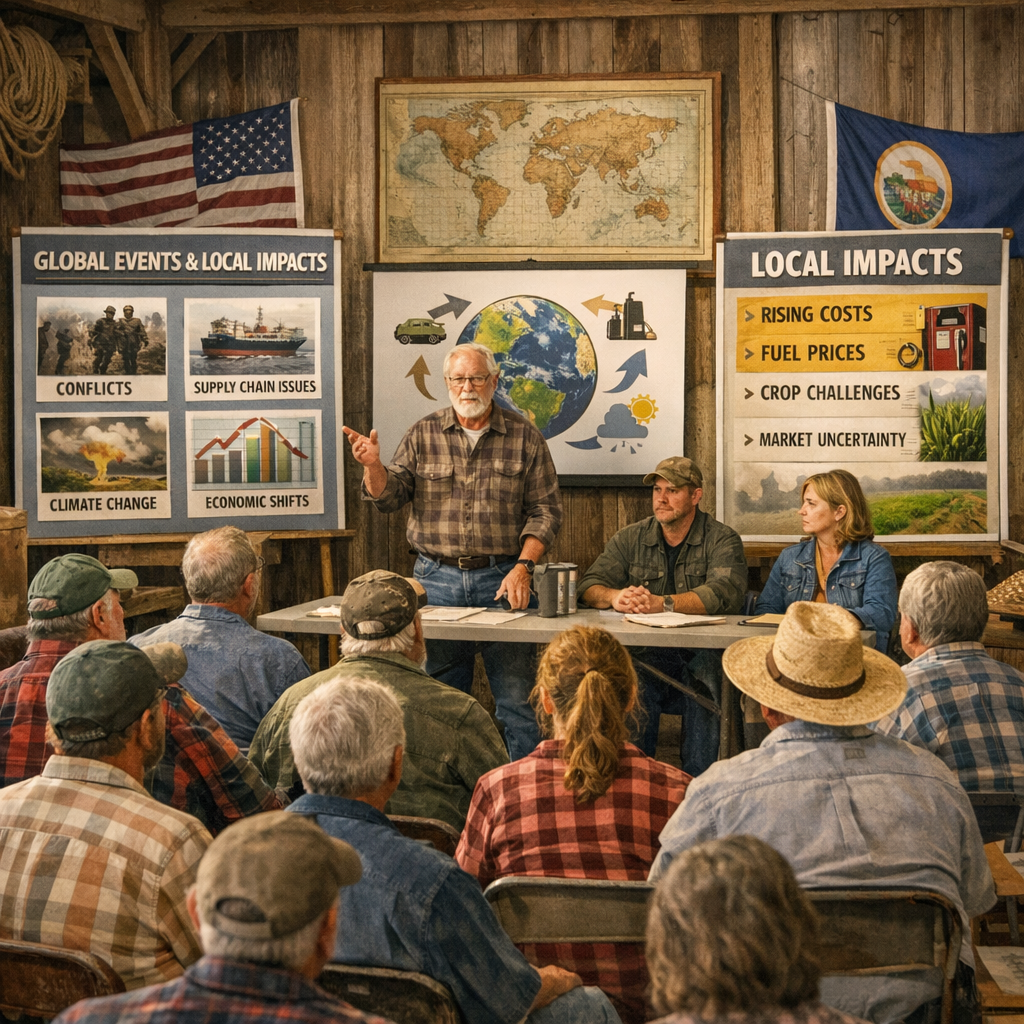
In our interconnected world, events unfolding thousands of miles away can have profound effects on local communities, including those in Pagosa Springs. Understanding these global-local connections is essential for building resilience and ensuring the well-being of our rural areas.
Global Conflicts and Local Food Security
Recent conflicts in regions like the Middle East have disrupted global supply chains, leading to increased costs for essential agricultural inputs such as fertilizers and fuel. The International Fund for Agricultural Development (IFAD) highlights that these disruptions expose vulnerabilities in the global food system, directly impacting small-scale farmers worldwide. For communities like ours, this can translate into higher operational costs for local farmers and increased prices at the grocery store.
Climate Change: A Shared Challenge
Climate change is not a distant threat; its effects are felt globally and locally. Droughts, floods, and extreme weather events are becoming more frequent, posing challenges to agriculture and water resources. The World Economic Forum reports that rural areas are on the front lines of these climate impacts, enduring significant hardships. In Pagosa Springs, we must be prepared for similar challenges, emphasizing the need for sustainable practices and community preparedness.
Health Crises and Rural Vulnerability
Global health crises often disproportionately affect marginalized and rural communities. The World Now reports that outbreaks like measles and foot-and-mouth disease have had severe impacts on rural populations, exacerbating existing vulnerabilities. Limited access to healthcare and resources can make rural areas more susceptible to such crises, underscoring the importance of robust local health infrastructure.
Building Resilience Through Community Action
While global events can pose challenges, they also offer opportunities for communities to come together and strengthen their resilience. By staying informed about international developments and understanding their local implications, communities like Pagosa Springs can proactively address potential impacts. Investing in sustainable agriculture, supporting local farmers, and enhancing healthcare access are vital steps toward building a resilient community.
In conclusion, the ripple effects of global events reach even the most remote communities. By recognizing these connections and taking proactive measures, Pagosa Springs can navigate the challenges posed by an interconnected world and emerge stronger and more resilient.