

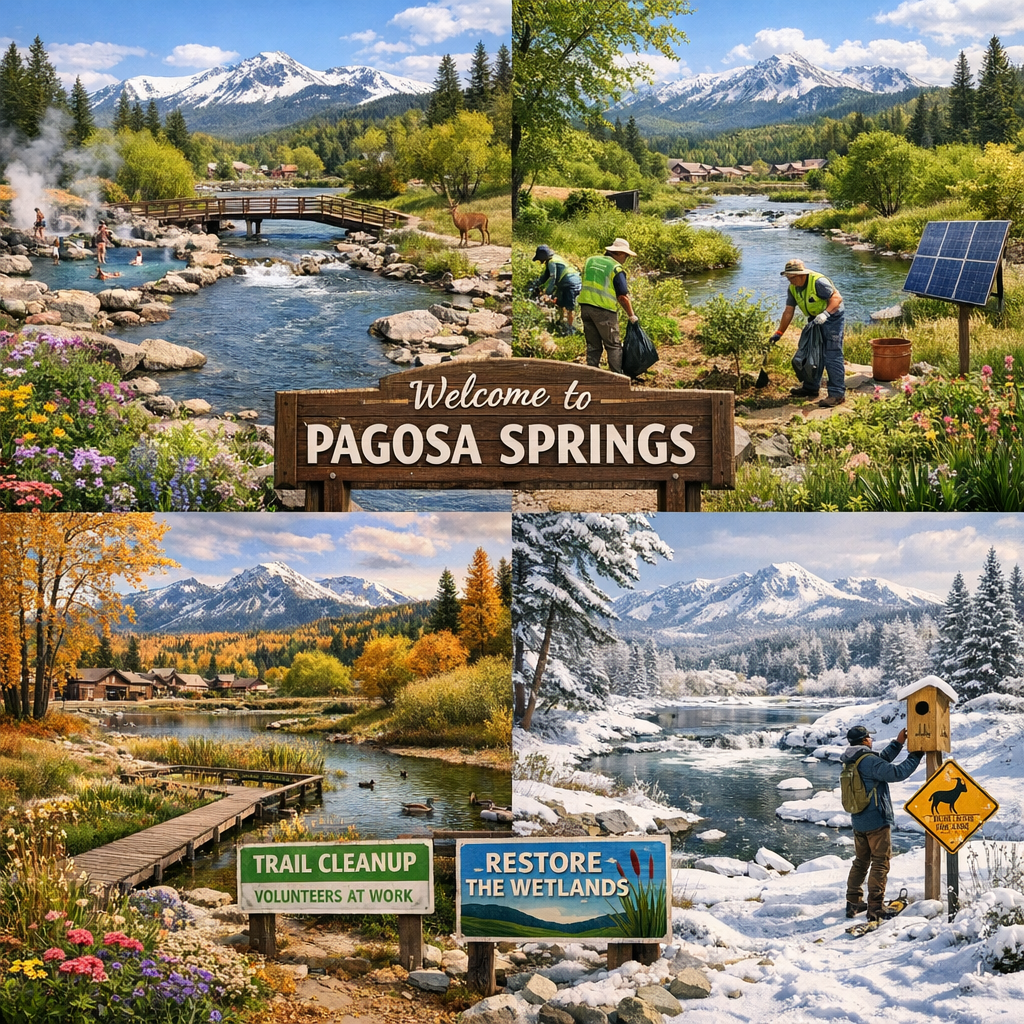
Pagosa Springs, nestled in Colorado’s “Sunbelt,” offers residents and visitors a distinctive climate characterized by four distinct seasons and abundant sunshine. Understanding these patterns is essential for both daily activities and long-term planning.
Seasonal Climate Overview
Winter
Winters in Pagosa Springs are marked by powdery snow, clear sunny days, and crisp nights. While the downtown area receives an average snowfall of 62 inches, the nearby Wolf Creek Ski Area boasts over 450 inches annually, making it a haven for winter sports enthusiasts. Daytime temperatures often remain above freezing, averaging in the high 40s, while nighttime temperatures can drop into the 20s.
Spring
Spring brings rejuvenation to the region, with hills coming alive with new growth and rivers swelling from snowmelt. This season is ideal for river rafting and kayaking, as the waterways are full and lively. Days are warm and clear, with cool nights, and the mountains often retain their snow cover until mid-April, extending opportunities for spring skiing.
Summer
Summers are characterized by warm, sunny days and pleasantly cool evenings. Afternoon thundershowers are common but typically brief, lasting less than half an hour. July temperatures range from highs in the low 80s to nighttime lows in the high 50s. The growing season, though starting late, extends into the fall, averaging 90-95 days.
Fall
Fall in Pagosa Springs is marked by Indian summers, with daytime temperatures resembling those of summer well into October. Cool evenings accompany the vibrant transformation of aspen and birch trees into brilliant yellows and oranges. By November, the high mountains often receive enough snow for early skiing.
Environmental Conservation Efforts
Beyond its captivating climate, Pagosa Springs is committed to preserving its natural environment through various initiatives.
Yamaguchi South River Improvement Project
Scheduled to begin construction in September 2025, the Yamaguchi South River Improvement Project aims to create a more sustainable and resilient river ecosystem. With a budget of $508,000, the project focuses on establishing diverse aquatic habitats to support cold-water trout and native fish populations, ensuring the long-term viability of these species amidst changing climate conditions.
Pagosa Springs Friends of the Wild
This community conservatorship unites residents, landowners, and conservation partners to protect critical habitats and foster environmental literacy. Their initiatives include the Pagosa Tree Farmers Campaign, which funds the acquisition of land for an Urban Elk Migration Buffer Corridor through a Nature Education Park, ensuring that wildlife, families, and the night sky continue to thrive together.
Geothermal Greenhouse Partnership
Utilizing local renewable energy, the Geothermal Greenhouse Partnership educates the community on sustainable agricultural practices by producing food year-round. Their Innovation Dome demonstrates an integrated aquaponic growing system that conserves water while maximizing food production, showcasing a commitment to environmental stewardship and community nourishment.
Understanding Pagosa Springs’ unique climate and supporting its environmental initiatives are vital steps toward ensuring the region’s natural beauty and ecological health for future generations.