

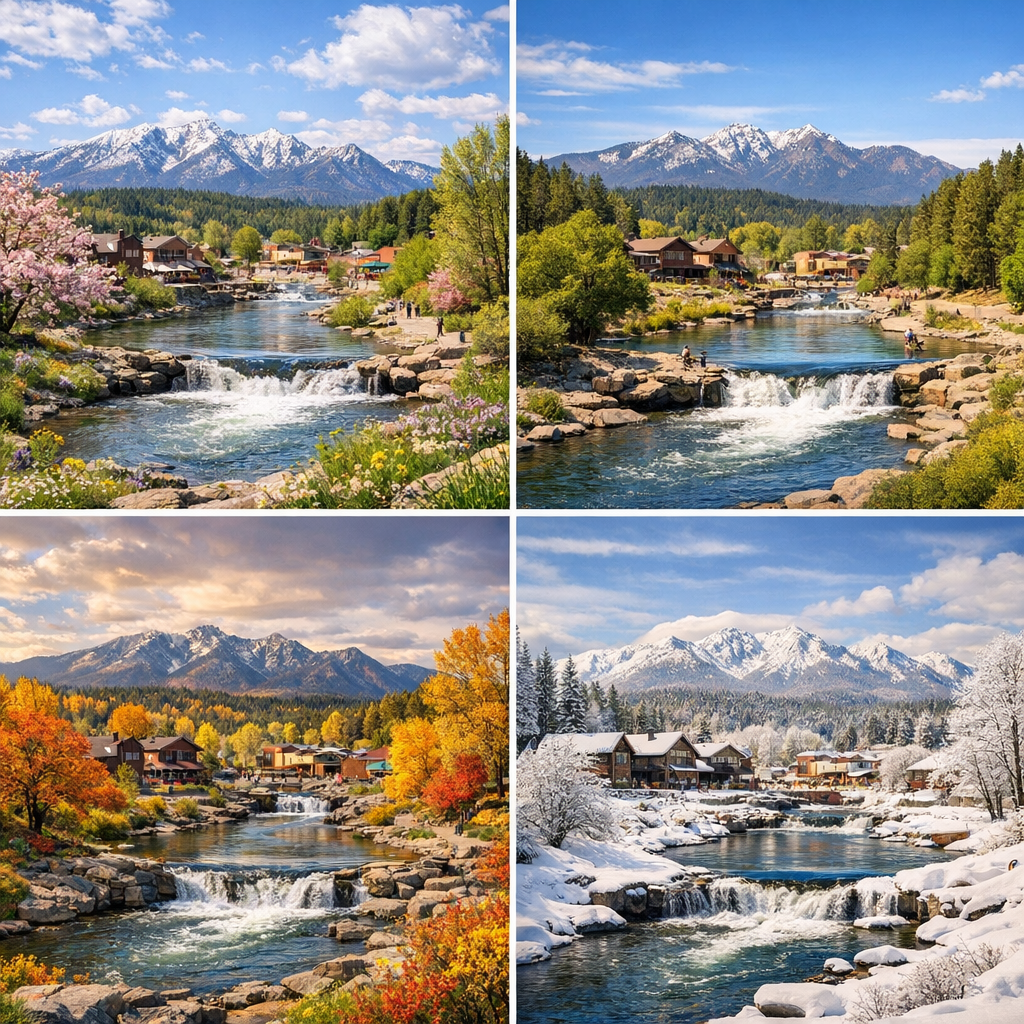
Pagosa Springs, nestled at approximately 7,000 feet on the western slope of the Continental Divide, offers a distinctive climate shaped by its unique geography. This location results in a blend of mountain and high-desert influences, providing residents and visitors with four distinct seasons and an abundance of sunshine.
Winter
Winters in Pagosa Springs are characterized by clear, sunny days and crisp, cold nights. While the nearby Wolf Creek Ski Area receives over 400 inches of natural snowfall annually, downtown Pagosa Springs averages about 67 inches of snow each year. Daytime temperatures often remain above freezing, with average highs around 39°F (4°C), and nighttime lows can drop to 4°F (-16°C). The combination of ample snowfall in the surrounding mountains and milder conditions in town creates an ideal environment for winter sports enthusiasts and those seeking a serene winter landscape.
Spring
As winter recedes, spring brings a resurgence of life to the region. The San Juan River swells with meltwater, attracting rafters and kayakers eager to navigate its currents. Days become warmer and clearer, with average highs reaching 59°F (15°C) in April and 68°F (20°C) in May. Nights remain cool, providing a refreshing contrast to the daytime warmth. The higher elevations retain their snowpack into April, offering opportunities for late-season skiing before wildflowers begin to bloom in the valleys.
Summer
Summers in Pagosa Springs are marked by warm, sunny days and pleasantly cool evenings. July, the warmest month, sees average highs of 83°F (28°C) and lows around 45°F (7°C). Afternoon thundershowers are common, typically brief, and help maintain the lushness of the landscape. These conditions are ideal for outdoor activities such as hiking, fishing, and attending local festivals. The growing season, though relatively short at about 90-95 days, extends into early fall, allowing for a variety of agricultural pursuits.
Autumn
Fall in Pagosa Springs is a spectacle of color and mild weather. Indian summers are common, with daytime temperatures often remaining summer-like well into October. Average highs in September are around 73°F (23°C), cooling to 63°F (17°C) in October. The surrounding forests of aspen and cottonwood trees transform into vibrant shades of yellow and orange, providing stunning vistas. By November, higher elevations begin to receive early snowfall, signaling the approach of another winter season.
Understanding these seasonal patterns allows residents and visitors to fully appreciate the diverse climate of Pagosa Springs. Whether it’s skiing in the abundant winter snow, enjoying water sports during the spring melt, hiking under summer skies, or witnessing the brilliant fall foliage, each season offers unique opportunities to engage with the natural beauty of the area.