

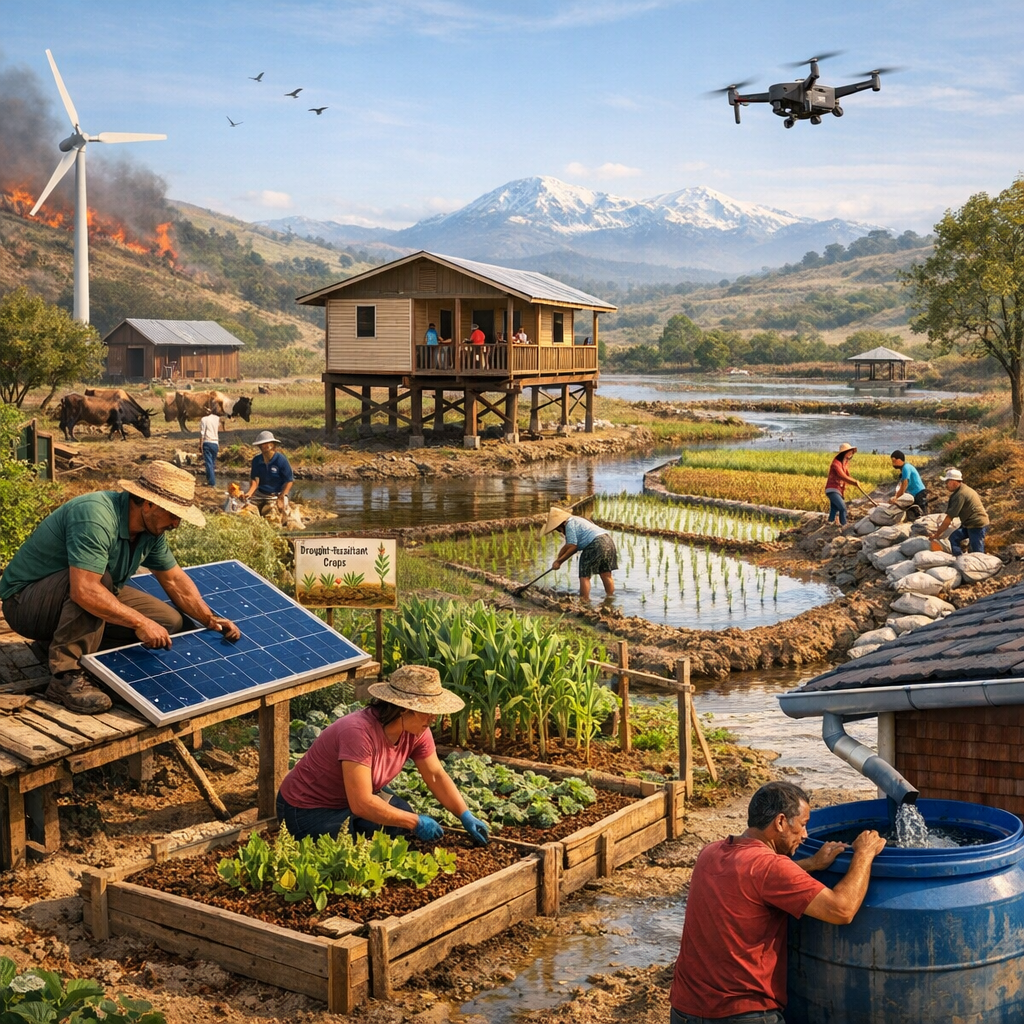
In our interconnected world, events unfolding thousands of miles away can have profound effects on rural communities like ours in Pagosa Springs. Understanding these global influences is crucial for building resilience and ensuring the sustainability of our local livelihoods.
Climate Change and Environmental Shifts
Climate change is a pressing global issue with direct repercussions for rural areas. Increased frequency of extreme weather events, such as droughts and floods, disrupt agricultural productivity and threaten food security. For instance, in Latin America and the Caribbean, 74% of countries are highly exposed to extreme weather events, significantly affecting food production and availability.
Similarly, Indigenous communities worldwide face displacement due to climate-induced environmental changes. This displacement not only affects their traditional ways of life but also leads to the loss of cultural heritage and increased vulnerability.
Economic Globalization and Trade Dynamics
Global economic trends, including trade policies and market fluctuations, have a cascading effect on rural economies. The transformation of local, community-based food systems into export-oriented, industrial supply chains driven by corporate agribusiness has undermined ecological sustainability and community resilience.
Additionally, conflicts in key regions can disrupt global supply chains, leading to increased costs for essential inputs like fertilizers and fuel. These disruptions can strain the financial stability of small-scale farmers and rural businesses, making it imperative for communities to develop adaptive strategies to mitigate such risks.
Health Crises and Pandemics
Global health crises, such as pandemics, disproportionately impact marginalized and rural communities. Limited access to healthcare infrastructure, economic disparities, and social inequalities exacerbate the effects of such crises, leading to higher morbidity and mortality rates in these populations.
Building Resilience in Rural Communities
To navigate these global challenges, rural communities must focus on building resilience through various strategies:
- Diversifying Economies: Reducing dependence on a single industry by promoting diverse economic activities can buffer communities against global market fluctuations.
- Investing in Sustainable Practices: Adopting sustainable agricultural and environmental practices can enhance food security and protect against climate-related disruptions.
- Strengthening Local Infrastructure: Improving healthcare, education, and digital connectivity ensures that rural populations have access to essential services and information.
- Fostering Community Engagement: Encouraging active participation in local governance and decision-making empowers communities to advocate for their needs and adapt to changing circumstances.
By understanding the interconnectedness of global events and local realities, rural communities like Pagosa Springs can develop proactive strategies to thrive in an ever-changing world.