

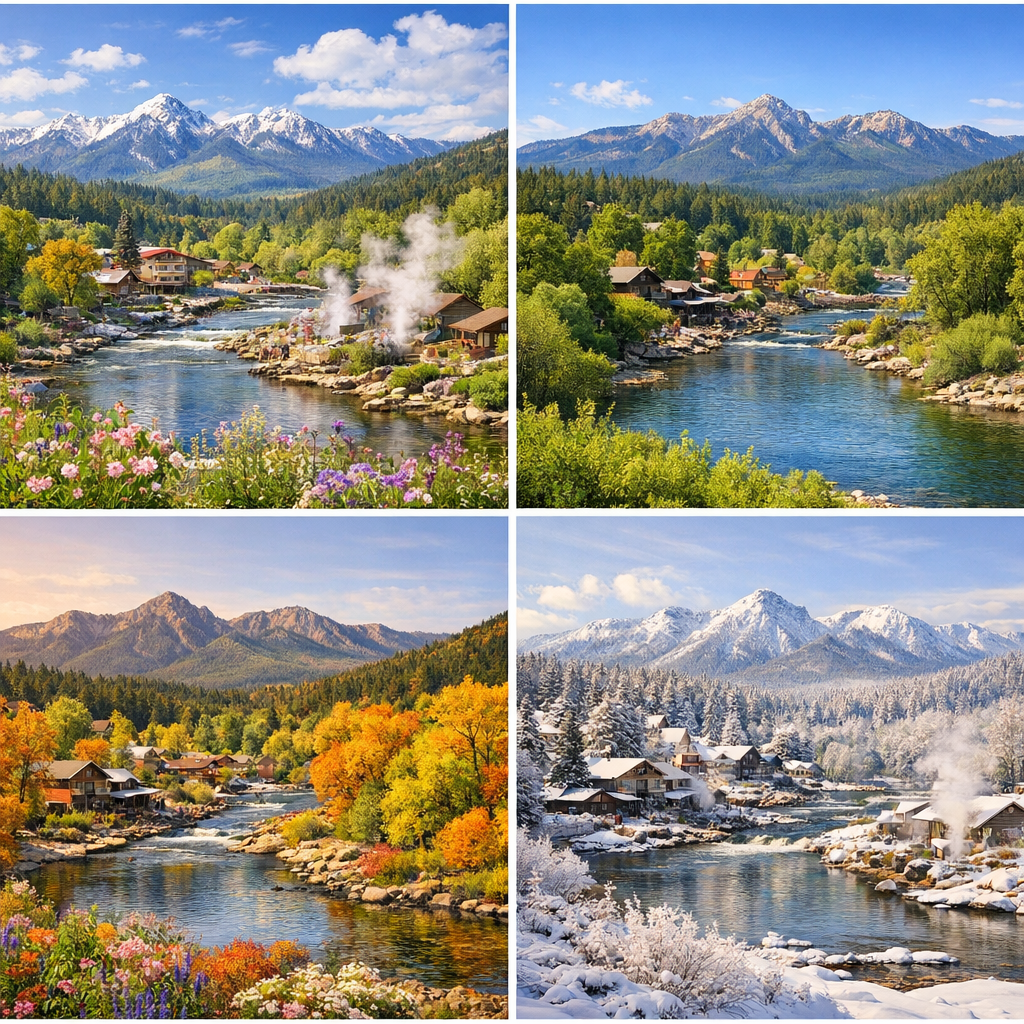
Pagosa Springs, nestled in the Colorado Sunbelt just north of the New Mexico border, offers a unique blend of mountain and high-desert climates. This combination results in an unusually mild climate characterized by abundant sunshine and four distinct seasons.
Winter
Winters in Pagosa Springs are marked by clear, sunny days and crisp, cold nights. While the nearby Wolf Creek Ski Area receives over 450 inches of natural snowfall annually, downtown Pagosa averages about 62 inches. Daytime temperatures often remain above freezing, averaging in the high 40s, while nighttime temperatures can drop into the 20s. This creates ideal conditions for winter sports enthusiasts and those who appreciate a snowy landscape without extreme cold. Source
Spring
As the snow melts, spring brings warmer days and cool nights. The San Juan River swells with runoff, delighting rafters and kayakers. The mountains retain their snow cover into April, offering extended skiing opportunities. This season is also marked by the blossoming of local flora, adding vibrant colors to the landscape. Source
Summer
Summers are warm and sunny, with daytime temperatures typically in the low 80s and pleasantly cool evenings. Afternoon thundershowers are common but brief, providing refreshing breaks from the heat. This season is perfect for outdoor activities like hiking, fishing, and attending local festivals. The growing season, though short, lasts into the fall, supporting local agriculture. Source
Fall
Fall in Pagosa Springs is characterized by Indian summers, with warm days lasting well into October and cool evenings. The aspen and birch trees transform into vibrant yellows and oranges, creating picturesque landscapes. By November, higher elevations begin to receive snowfall, signaling the approach of winter. Source
Environmental Conservation Efforts
Recognizing the importance of preserving its natural beauty, Pagosa Springs has initiated several environmental conservation projects. The Yamaguchi South River Improvement Project aims to create a more sustainable river ecosystem by enhancing aquatic habitats to support cold-water trout and native fish populations. This project is a collaborative effort involving multiple organizations and is set to begin construction in September 2025. Source
Additionally, the town is pursuing International Dark Sky certification to preserve the community’s night sky. This initiative focuses on implementing lighting practices that reduce light pollution, benefiting both wildlife and residents. Source
Understanding Pagosa Springs’ climate and seasonal patterns not only enhances appreciation for the area’s natural beauty but also underscores the importance of ongoing conservation efforts to maintain the delicate balance between nature and community.