

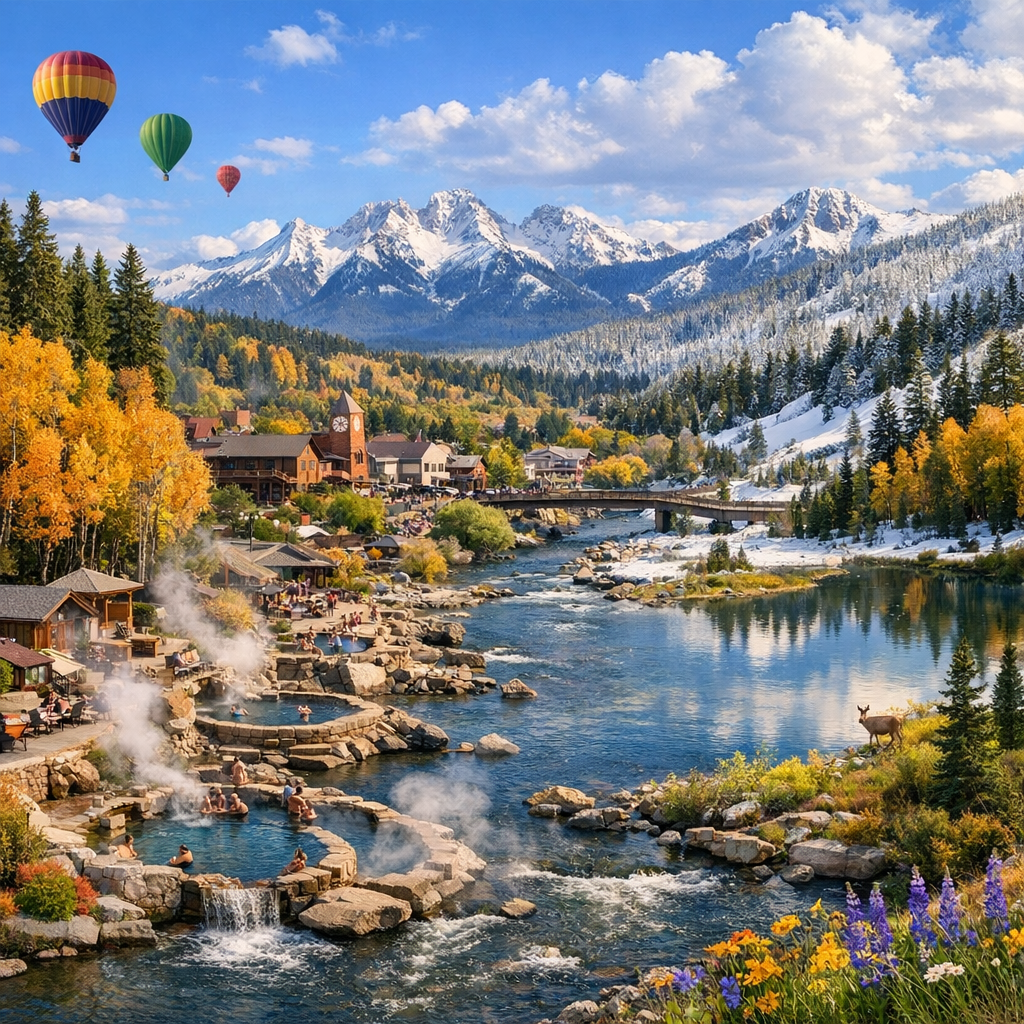
Pagosa Springs, nestled at over 7,000 feet in southwest Colorado’s San Juan Mountains, boasts a unique climate shaped by its high-altitude location and proximity to the Continental Divide. This setting results in four distinct seasons, each offering its own charm and array of activities.
Winter: Snowy Landscapes and Clear Skies
Winter in Pagosa Springs is characterized by powdery snow, clear sunny days, and crisp nights. The nearby Wolf Creek Ski Area, renowned for receiving over 450 inches of natural snowfall annually, offers exceptional skiing opportunities. In town, average snowfall is around 62 inches, with daytime temperatures often in the high 40s and nighttime lows rarely dipping below the 20s. This combination creates a winter wonderland ideal for various outdoor activities. Source
Spring: Blossoming Nature and Flowing Rivers
As spring arrives, the hills come alive with new growth, and local rivers swell with melting snow, delighting rafters and kayakers. Days are warm and clear, while nights remain cool. The mountains retain their snow cover, typically allowing for spring skiing until mid-April. This season offers a refreshing transition from winter’s chill to summer’s warmth. Source
Summer: Warm Days and Cool Evenings
Summers in Pagosa Springs are marked by warm, sunny days and pleasantly cool evenings. Afternoon thundershowers are common but usually brief, lasting less than half an hour. July temperatures typically range from highs in the low 80s to nighttime lows in the high 50s. The growing season, though starting late, extends into the fall, averaging 90-95 days. This season is perfect for hiking, fishing, and enjoying the abundant sunshine. Source
Fall: Vibrant Colors and Mild Temperatures
Fall brings Indian summers with daytime temperatures resembling those of summer, lasting well into October. Cool evenings complement the warm days. The mountains are adorned with vibrant yellows and oranges as aspen and birch trees change color. By November, the high mountains often receive enough snow for Wolf Creek Ski Area to open, signaling the transition back to winter. Source
Climate Overview
Pagosa Springs enjoys approximately 300 days of sunshine annually, offering ample opportunities for outdoor recreation year-round. The town’s semi-arid climate, combined with its elevation, results in low humidity and a comfortable environment. Average annual precipitation is around 20.64 inches, with snowfall averaging 67.4 inches in downtown Pagosa Springs. These conditions contribute to the area’s appeal as a destination for those seeking diverse weather experiences. Source
Understanding these seasonal patterns helps residents and visitors alike plan activities and appreciate the natural beauty that each season brings to Pagosa Springs.