

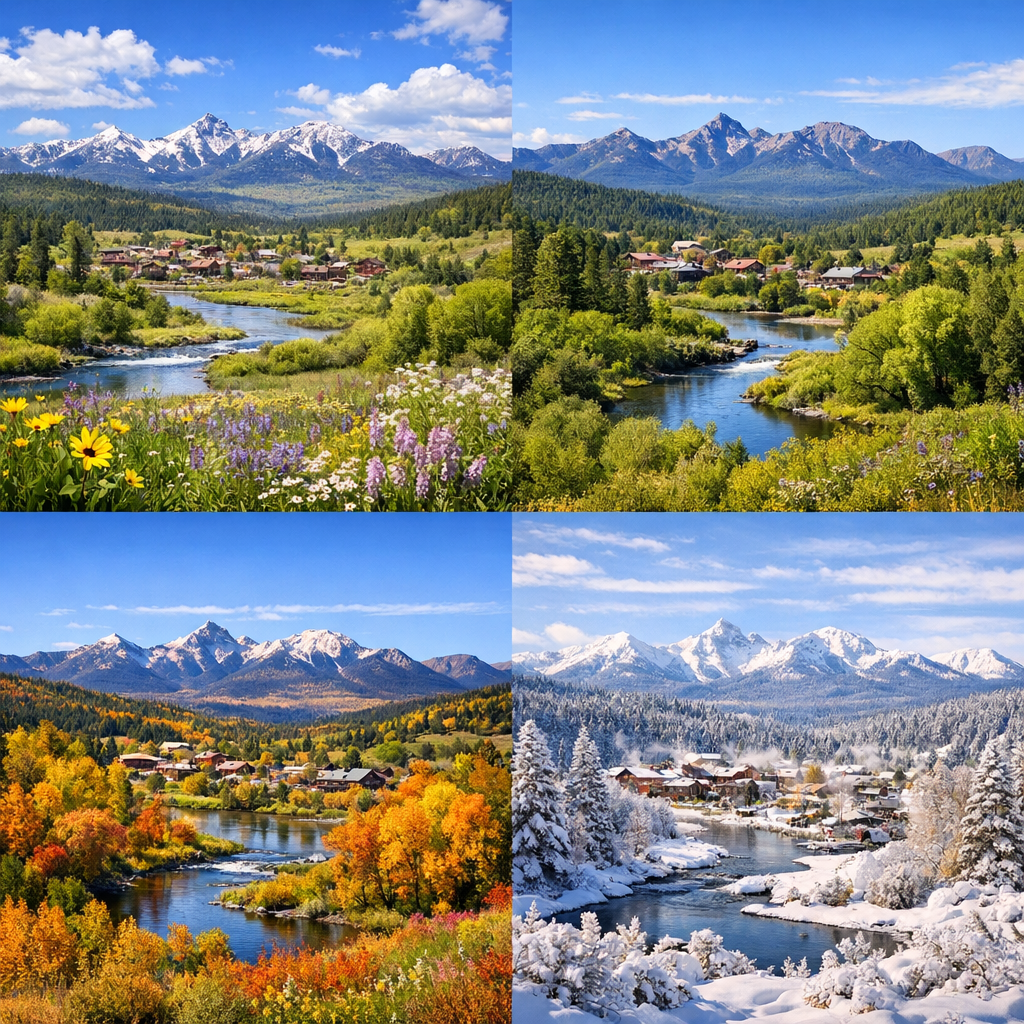
Pagosa Springs, nestled at approximately 7,126 feet on the western slope of the Continental Divide, offers a unique climate influenced by its high desert plateau and proximity to the Rocky Mountains. This combination results in four distinct seasons and an impressive average of over 300 days of sunshine each year.
Winter
Winters in Pagosa Springs are marked by clear, sunny days and crisp, cold nights. While the nearby Wolf Creek Ski Area receives over 400 inches of natural snowfall annually, downtown Pagosa Springs averages about 67.4 inches of snow each year. Daytime temperatures often remain above freezing, with average highs around 39°F (4°C) and lows dipping to 4°F (-16°C). The abundant sunshine helps keep the streets clear, making winter activities enjoyable both in town and on the slopes.
Spring
As the snow melts, spring brings warmer days and cool nights. The San Juan River swells with runoff, delighting rafters and kayakers. Average high temperatures in April reach 59°F (15°C), with lows around 25°F (-4°C). The mountains retain their snow cover into April, offering opportunities for late-season skiing.
Summer
Summers are characterized by warm, sunny days and pleasantly cool evenings. July, the warmest month, sees average highs of 83°F (28°C) and lows of 45°F (7°C). Afternoon thundershowers are common but brief, providing refreshing breaks from the heat. The growing season is relatively short, lasting about 90-95 days, but the favorable weather conditions make it ideal for outdoor activities.
Fall
Fall in Pagosa Springs is marked by Indian summers, with daytime temperatures often remaining summer-like well into October. Average highs in October are around 63°F (17°C), with lows of 27°F (-3°C). The surrounding aspen and birch trees transform into vibrant yellows and oranges, creating picturesque landscapes. By November, higher elevations begin to receive snowfall, signaling the approach of winter.
Environmental Considerations
Pagosa Springs’ climate and geography contribute to its rich biodiversity and natural beauty. However, residents and visitors should be mindful of environmental factors such as wildfire risks during dry periods and the importance of water conservation. Staying informed about local weather patterns and adhering to community guidelines can help preserve the area’s natural resources for future generations.
Understanding the seasonal variations and environmental factors in Pagosa Springs enhances appreciation for this unique region and aids in planning activities throughout the year.