

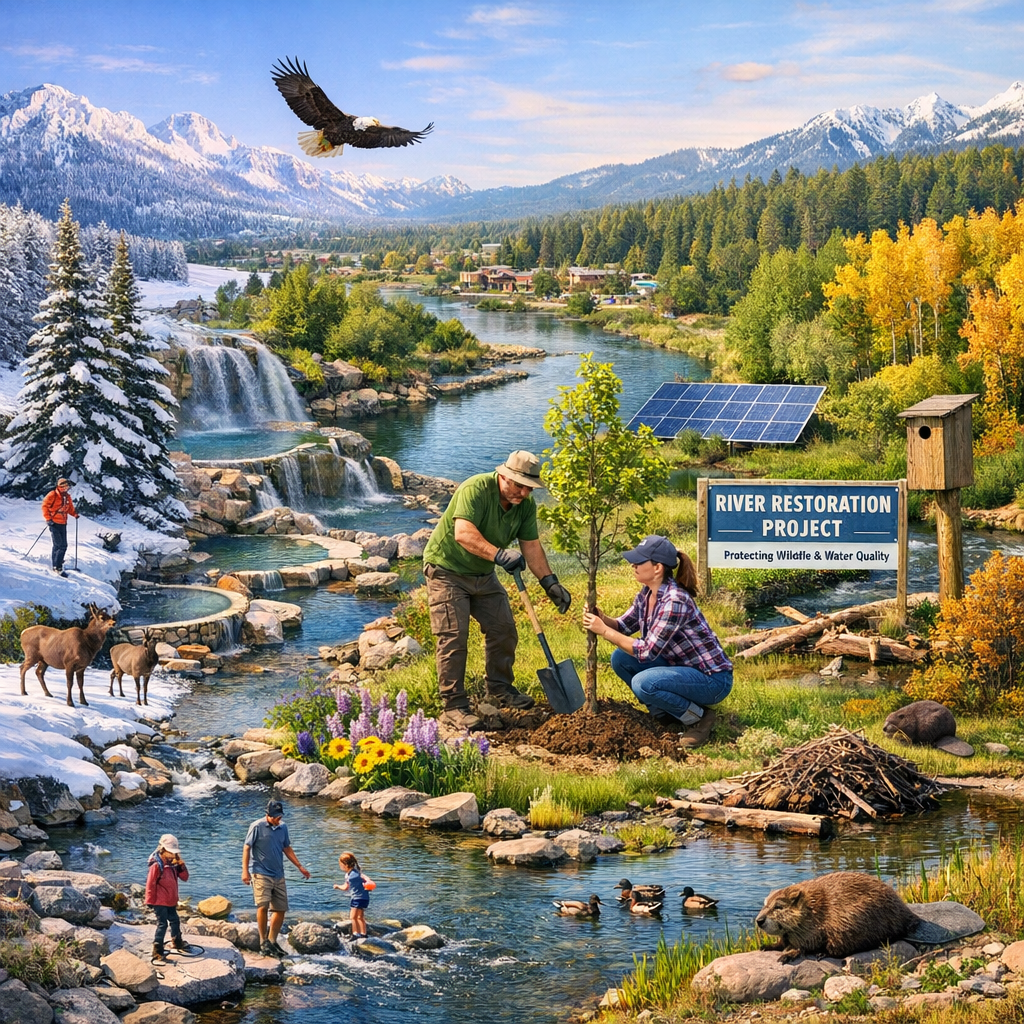
Pagosa Springs, nestled in Colorado’s “Sunbelt” just north of the New Mexico border, offers a unique blend of mountain and high-desert climates. Situated at approximately 7,000 feet on the western slope of the Continental Divide, the town experiences four distinct seasons, each contributing to its diverse environmental landscape.
Climate Overview
Residents and visitors enjoy around 300 days of sunshine annually. The warmest month, July, sees average high temperatures of 80°F (26°C) and lows around 45°F (7°C). January, the coldest month, averages highs of 39°F (4°C) and lows of 4°F (-16°C). This semi-arid climate, combined with low winds, provides comfortable conditions year-round. Source
Seasonal Highlights
Winter
Winters are characterized by powdery snow and clear, sunny days. While downtown Pagosa Springs averages 62 inches of snowfall, the nearby Wolf Creek Ski Area receives over 450 inches, offering abundant opportunities for winter sports enthusiasts. Source
Spring
Spring brings the first growth of the season, with local rivers swelling from snowmelt, delighting rafters and kayakers. Days are warm and clear, while nights remain cool. Snow-covered mountains often allow for spring skiing into mid-April. Source
Summer
Summers are marked by warm, sunny days and pleasantly cool evenings. Afternoon thundershowers are common but brief. July temperatures typically range from highs in the low 80s to nighttime lows in the high 50s. The growing season lasts into the fall, averaging 90-95 days. Source
Fall
Indian summers extend warm daytime temperatures into October, accompanied by cool evenings. The mountains showcase vibrant fall colors as aspen and birch trees turn yellow and orange. By November, higher elevations receive enough snow for early skiing. Source
Environmental Conservation Efforts
Pagosa Springs is committed to preserving its natural beauty and ecological health through various initiatives:
Yamaguchi South River Improvement Project
Scheduled to begin in September 2025, this project aims to create a sustainable river ecosystem by establishing diverse aquatic habitats to support cold-water trout and native fish populations. The initiative addresses challenges posed by climate change and drought conditions. Source
Pagosa Wetland Partners
This community-driven group focuses on conserving a 15-acre wetland adjacent to the San Juan River. Fed by geothermal hot springs, the wetland serves as a habitat for over 180 bird species and provides opportunities for nature observation. Source
Geothermal Greenhouse Partnership
Utilizing local renewable energy, this nonprofit educates the community on sustainable agricultural practices by producing food year-round in controlled environment agriculture greenhouses. Their Innovation Dome employs a closed-loop aquaponic system to conserve water while maximizing food production. Source
Understanding Pagosa Springs’ climate and supporting its environmental initiatives are essential for maintaining the region’s natural beauty and ecological balance. Community involvement plays a crucial role in these conservation efforts, ensuring that the area’s unique environment thrives for generations to come.