

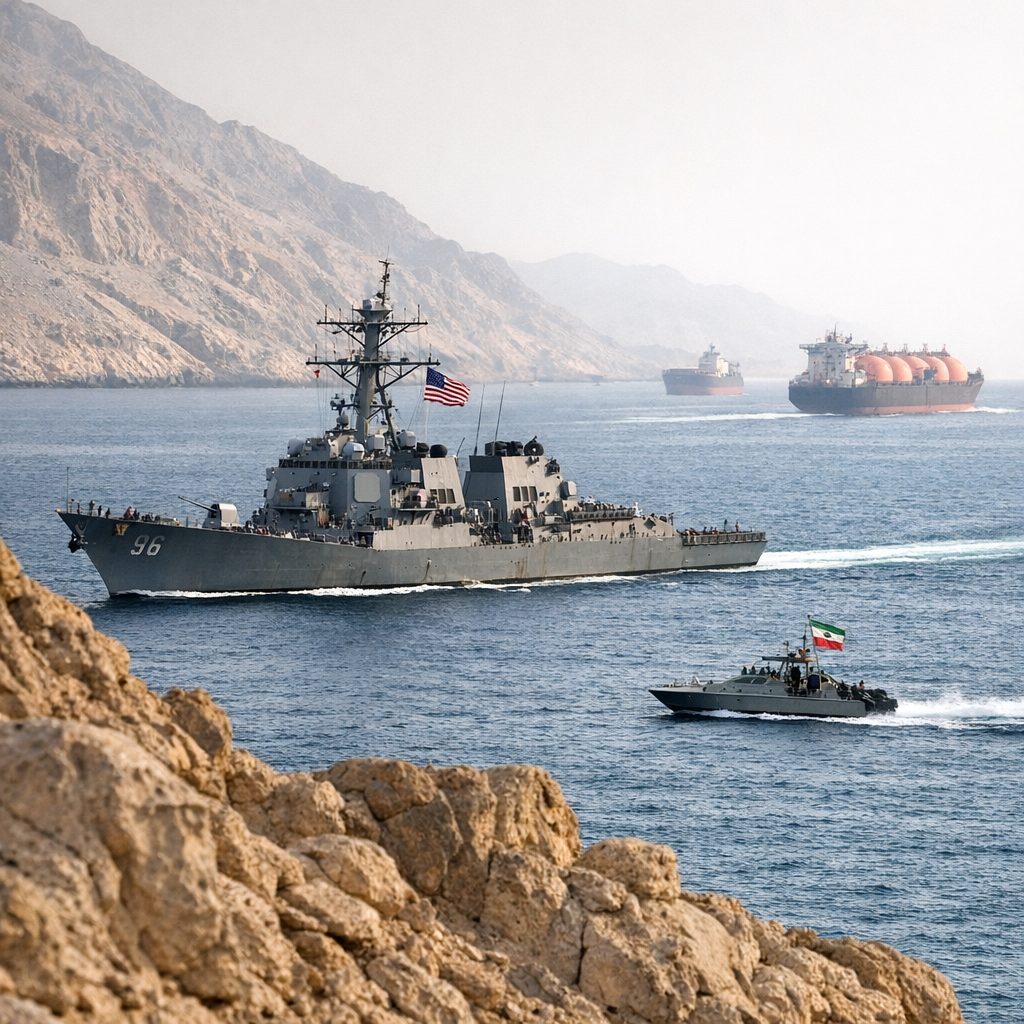
The Strait of Hormuz, a narrow passage connecting the Persian Gulf to the Arabian Sea, is one of the world’s most critical maritime chokepoints. Approximately 20% of the global oil supply transits through this strait, underscoring its strategic importance.
Recent Developments
In recent weeks, tensions have escalated in the region. The U.S. Navy has reported multiple incidents involving Iranian vessels, leading to heightened security measures. President Donald Trump announced a temporary pause in ‘Project Freedom,’ a U.S. initiative aimed at ensuring safe passage for commercial ships through the strait, to allow for diplomatic negotiations with Iran. Source
Economic Implications
The instability in the Strait of Hormuz has significant repercussions for global energy markets. Oil prices have experienced volatility, with Brent crude futures edging higher due to supply concerns. Source This uncertainty can lead to increased fuel costs, affecting various sectors of the economy.
Impact on the United States
For the United States, the situation presents both challenges and strategic considerations. Ensuring the free flow of oil is vital for economic stability. Additionally, the U.S. military’s presence in the region underscores the nation’s commitment to safeguarding international shipping lanes.
Looking Ahead
As diplomatic efforts continue, the international community remains watchful. The outcome of negotiations will likely have lasting effects on global trade and energy security. Stakeholders are encouraged to stay informed and prepared for potential shifts in the geopolitical landscape.